


Sincerely - Off My Chest
4.2211.00 Reviews
App Specs
- Version
- 1.91.00
- Updated On
- License
- Free
- Downloads
- 100,000+
- Developer
- MWM - AI Music and Creative Apps
- Categories
- Social
- Platform
- Android
Screenshots
 Analysis by AppCompare
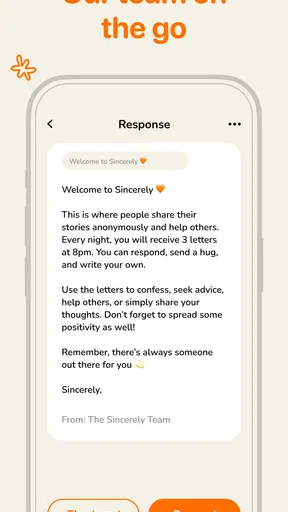
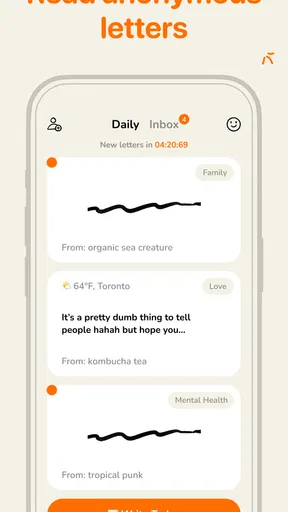
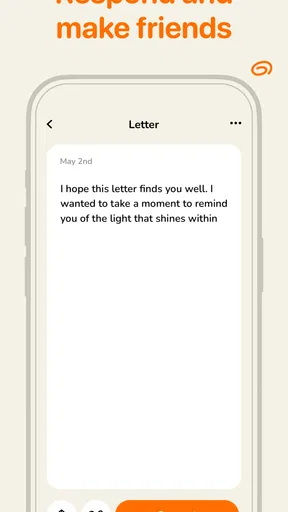
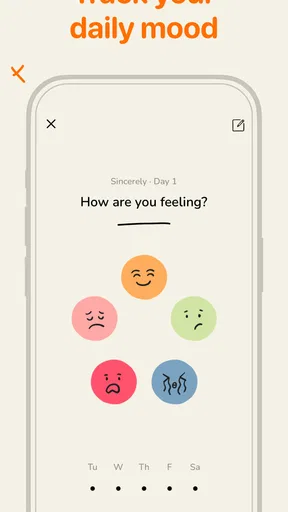
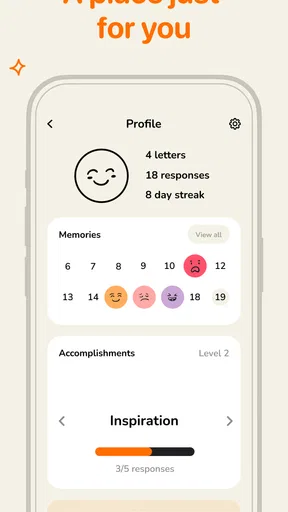
I approached Sincerely - Off My Chest as a place for putting difficult thoughts into words without attaching them to a public identity. It is a social app from MWM - AI Music and Creative Apps, built around reading and writing anonymous stories rather than maintaining a conventional profile. That difference matters: the experience feels less like collecting followers and more like opening a stream of personal reflections from people who may never reveal who they are.
My first impression was that the concept is easy to understand. You can browse what others have shared, then decide whether you want to contribute your own story. The free entry point makes it simple to try, while optional purchases range from $7.99 to $45.99 per item. I would still treat it as an app for adults, since its content rating is Mature 17+, and I would not recommend it to someone who wants a tightly moderated, cheerful social feed.
How the reading experience supports different readers
The strongest part of the design is the narrow purpose. Instead of asking me to learn a complicated social network, Sincerely focuses attention on anonymous writing. That can help readers who find profile-heavy platforms tiring or distracting. There are fewer identity signals to decode, and the central activity is reading what someone chose to say.
For people who process information better in short passages, anonymous stories can be easier to approach than long discussions filled with replies, reactions, and competing media. I found that the format encourages a slower kind of browsing. Rather than jumping between videos and notifications, I could stay with one piece of writing and decide whether it felt relatable, useful, or emotionally heavy.
That simplicity also has a limit. Anonymous writing depends heavily on the clarity of each contributor. A story may be brief, emotional, or missing context, so readers who need highly structured information may have to work harder to understand what is happening. This is not a reference tool or an organized support directory. It is a stream of personal expression, and the quality of the experience changes with the writing in front of you.
I would use it with a deliberate reading routine. Instead of scrolling when I am already overwhelmed, I would open a small number of stories, pause between them, and leave when the tone becomes too intense. That habit is especially useful for readers who are sensitive to emotional content or who find it difficult to switch away from a compelling feed.
Navigation that favors a focused purpose
Because the app is centered on reading and writing, its navigation is easier to understand than the layered menus found in many larger social networks. The important question is usually whether I want to browse or share. That makes the first session less intimidating for someone who is not comfortable with social media conventions.
Worth Reading Before You Choose

EA SPORTS FC Mobile 26 Is a Bigger Football Game, but It Takes Time

Flipboard Shows What News Apps Must Do Beyond the Feed

Switching to Android Auto Means Rethinking Your Driving Routine

Google Calendar Makes a Crowded Week Easier to Manage

Ludo King Makes the Most of the Minutes Between Plans

Baby Panda World Brings Quick Play to Modern Phones, but Its Game Library Feels Busy
There is also a practical benefit for people who prefer predictable tasks. I can approach the app with a simple plan: read for a few minutes, draft a thought, or leave. It does not require me to build a public persona before participating. For a shy user, someone returning to social apps after a break, or a person who dislikes profile maintenance, that reduced social pressure is meaningful.
Still, anonymous spaces can be less predictable in another way. The interface may be straightforward while the content is not. A person who needs firm topical boundaries, content warnings, or carefully separated categories should be cautious. The comfort of simple navigation does not automatically make the material emotionally simple.
Writing without the pressure of a public identity
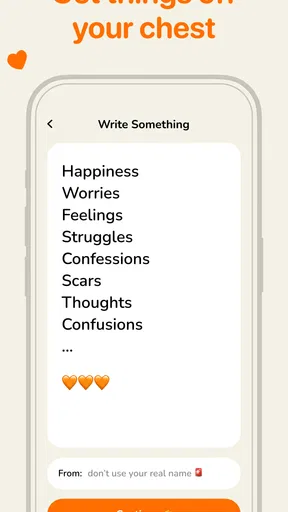
The writing side is where the app feels most distinctive. I can imagine using it after an ordinary but frustrating day: perhaps I had an argument at work, felt embarrassed by a mistake, or wanted to say something that would sound too dramatic to friends. Writing anonymously can create enough distance to be honest without turning the moment into a permanent part of my public image.
My advice would be to draft as if I were writing a private note first. I would remove names, workplaces, locations, and other details that could identify me or someone else. An anonymous label is not the same thing as complete anonymity in the real world; a very specific story can still reveal its author to people who know the circumstances. That is one of the most important practical trade-offs in the whole concept.
The same approach helps readers. When I read an anonymous confession, I should not assume I know the complete story or the person behind it. Taking the writing as one perspective, rather than a verified account of events, makes the experience healthier and reduces the chance of treating emotional posts as instructions or facts.
Motor, sensory, and situational access in everyday use
For motor access, a text-centered app can be less demanding than a platform built around rapid video gestures. Reading and composing generally allow more time than reacting to a fast-moving visual feed. Someone who prefers deliberate taps and pauses may find that calmer rhythm easier to manage.
That does not mean every interaction will suit every person. Writing on a phone can be tiring for users with limited dexterity, tremors, joint pain, or difficulty using a small keyboard. In that situation, I would keep posts short, use the device’s own dictation tools if they work comfortably, and edit carefully before sharing. I would not treat anonymous posting as a reason to rush through proofreading, because small details can change the meaning of an emotional story.
Readers with visual sensitivities may appreciate a text-first experience compared with an autoplay-heavy social feed, but the emotional intensity of the words can still be sensory stress in its own form. A quiet page is not necessarily a calming page. I would avoid opening the app in bed, during a commute when I need full attention, or immediately before an important appointment if difficult subjects tend to stay in my mind.
For people with hearing-related access needs, the focus on written stories is potentially more comfortable than social services that depend on spoken audio. I would still judge the experience by the actual presentation on my device, including text size, contrast, spacing, and compatibility with the phone’s accessibility settings. Those settings can make a large difference, but they belong to the operating system rather than being a promise that every screen in the app will behave perfectly with every assistive setup.
People with cognitive or attention-related needs may benefit from the app’s limited purpose, especially when a large social network feels too busy. The anonymous format removes some common decisions: I do not need to choose a profile photo, manage followers, or perform a polished version of myself. On the other hand, an endless supply of emotionally charged stories can make stopping difficult. I would set a time limit before browsing, not after I have already become absorbed.
A realistic scenario: using it after a difficult day
Imagine finishing a shift after a tense conversation with a manager. I might want to express the frustration but not involve coworkers or family. I could open the app, read a few stories to see whether the tone feels supportive, then write a short account without names or identifying details. Before posting, I would remove the exact workplace, date, and job title, reread the text for accidental clues, and decide whether sharing would actually help me.
That workflow shows both the strength and the weakness of the service. It offers a lower-pressure outlet than posting on a personal account, but it does not replace a trusted friend, counselor, or formal support channel. If the situation involved immediate danger, harassment, self-harm, or a serious legal or medical concern, I would use an appropriate real-world service instead of relying on anonymous reactions.
When location, privacy, or attention changes the experience
Situational access is another area where the app can be useful. I could read quietly in a waiting room, during a break, or at home without needing to participate in a live conversation. Someone who is socially anxious may find written anonymity easier than speaking in a group. A user who is learning to express feelings in English could also use short posts as a low-pressure writing exercise, provided the emotional content does not become overwhelming.
However, the same privacy can disappear if I use it around other people. Anonymous stories may include mature or personal subjects, so I would not browse openly on public transport, at work, or beside children. Headphones would not solve the issue if the content is visible on the screen. I would also avoid writing while driving, walking through traffic, or handling a task that needs concentration.
For users with inconsistent internet access or limited data, the practical experience may depend on how the app loads its content in their particular environment. I would test it on a normal connection before planning to rely on it during travel. The app is free to install, but that should not be confused with an entirely cost-free long-term experience, since optional in-app purchases are available.
What may still create barriers
The biggest barrier is not the basic idea; it is the uncertainty that comes with anonymous social content. I cannot assume every story will be kind, accurate, or suitable for my mood. Someone looking for professional answers, identity-based community support, or a carefully moderated peer group may be better served by a specialized service.
Another barrier is the tension between openness and safety. Anonymity can help people disclose feelings, but it can also lower the social cost of insensitive behavior. I would avoid treating the feed as a guaranteed safe space. If a post upsets me, the healthiest response may be to stop reading rather than argue with an unknown person.
There is also a financial consideration for users who want to avoid purchases entirely. Since the app is free but offers items priced from $7.99 to $45.99, I would review any purchase screen carefully and decide in advance whether I want to spend money. For a casual reader, the free starting point may be enough; for someone seeking a completely uncomplicated, no-purchase environment, that commercial layer may feel distracting.
The app’s age classification is another reason to think about context. Mature themes can be appropriate for older teenagers and adults while still being unsuitable for younger users or people who are currently vulnerable. I would not hand it to a child as a general journaling tool, and I would not use it as a substitute for supervised emotional support.
How it compares with familiar alternatives
Compared with a mainstream social network, Sincerely is less about public identity and more about the individual story. That is its clearest advantage for me. I do not have to turn a confession into a polished post for people who already know me. The trade-off is that the relationships may feel less durable, because anonymity makes it harder to build accountability and ongoing trust.
Compared with a private notes app, it offers the possibility of being read by others and discovering that a feeling is shared. A notes app is better when privacy is the only goal; this app is better when I want expression plus some connection. I would choose the notes app for sensitive information, names, records, or anything I would regret exposing.
Compared with a moderated support community, this app may feel more immediate and less formal, but it is not the option I would choose when I need trained guidance, organized resources, or dependable follow-up. Its value is emotional release and recognition, not professional care.
Who I think will benefit most
I would recommend it to adults and older teenagers who want a text-based social outlet, dislike public profiles, or find it easier to write feelings than say them aloud. It may also suit readers who want to encounter a broad range of personal experiences without committing to a long-term online identity.
I would be more selective for anyone who is highly affected by upsetting content, needs strong topic controls, or is looking for answers that can be checked. People who want direct contact with friends may prefer a messaging app, while people who want a truly private diary should choose a private writing tool instead.
The app has reached over 100 thousand installs, and its average rating is 4.3 from around 1.5 thousand ratings, with more than two hundred written reviews. Those figures suggest that the idea has found an audience, but they do not change my practical advice: the right fit depends much more on how comfortable you are with anonymous, emotionally varied content than on popularity.
My inclusive verdict
I found Sincerely - Off My Chest most convincing when I treated it as a controlled outlet rather than a complete social solution. Its focused reading and writing format can reduce the identity pressure found on larger platforms, and that makes it approachable for people who prefer text, privacy, and slower participation. The current version is 1.91.00, and it supports devices running Android 7.0 or later, which makes the technical entry point reasonably broad for compatible users.
My practical recommendation is to begin with reading, adjust the phone’s text and display settings to your needs, and decide on personal boundaries before writing. Avoid identifying details, do not use anonymous posts for urgent support, and leave the feed when the emotional tone stops being helpful. Those steps are not extra decoration; they are what make the concept safer and more accessible in real life.
In the end, I would choose this app for honest expression without a public profile, especially during ordinary moments when I need to put a feeling somewhere. I would skip it if I needed guaranteed privacy, professional advice, or a highly structured community. Its best quality is the permission to speak without performing an identity, while its main limitation is that anonymity cannot guarantee clarity, kindness, or emotional safety.
Pros
- Anonymous posting makes it easier to share sensitive thoughts.
- Simple interface keeps writing and browsing straightforward.
- Community responses can provide comfort and different perspectives.
- Useful for journaling feelings without attaching your real identity.
- Content covers many topics
- so finding relatable posts is easy.
Cons
- Anonymous spaces may attract insensitive or judgmental replies.
- Posts can include upsetting
- explicit
- or emotionally heavy content.
- Advice from strangers is not a substitute for professional support.
- Popular posts may overshadow quieter or less visible experiences.
- Privacy still depends on the app’s policies and moderation practices.
FAQs for Sincerely - Off My Chest
What is Sincerely - Off My Chest used for?
Sincerely - Off My Chest is designed for expressing thoughts, feelings, worries, and personal experiences in a private or supportive environment. It can be useful when you want to write something you are not ready to say aloud, organize your emotions, or share a confession without turning it into a traditional social-media post. Its value depends on how comfortable you feel with the available privacy and sharing options.
Is Sincerely - Off My Chest anonymous and private?
Before posting, users should carefully review how the app handles identity, profile information, visibility, and stored content. An app focused on confessions may offer anonymous or limited-identity sharing, but that does not automatically mean complete privacy. Avoid including passwords, financial details, addresses, or information that could identify another person, and check the current privacy policy and account settings before submitting anything personal.
Can I read other people’s posts or respond to them?
The app’s experience may include a feed or collection of posts from other users, allowing you to read relatable experiences and possibly react or respond. Community features can make the platform feel supportive, but conversations may also contain sensitive, emotional, or controversial material. Use reporting, blocking, and moderation tools when available, and remember that online replies are not a substitute for professional counseling or emergency assistance.
Is Sincerely - Off My Chest free to download and use?
The application may be available to download at no initial cost, but users should check the current store listing for advertisements, optional purchases, subscriptions, or limits on certain features. Pricing and availability can change between Android and iOS and may also vary by region. Review the payment terms carefully, especially if the app offers premium tools or automatically renewing subscriptions.
Is Sincerely - Off My Chest suitable for children or people in crisis?
Because the app centers on personal disclosures and may contain mature, upsetting, or emotionally intense content, it may not be appropriate for younger users without parental guidance. It should also not be treated as a crisis-support service. If you or someone else is in immediate danger, contact local emergency services or a qualified crisis hotline instead of relying only on posts or community responses.


